

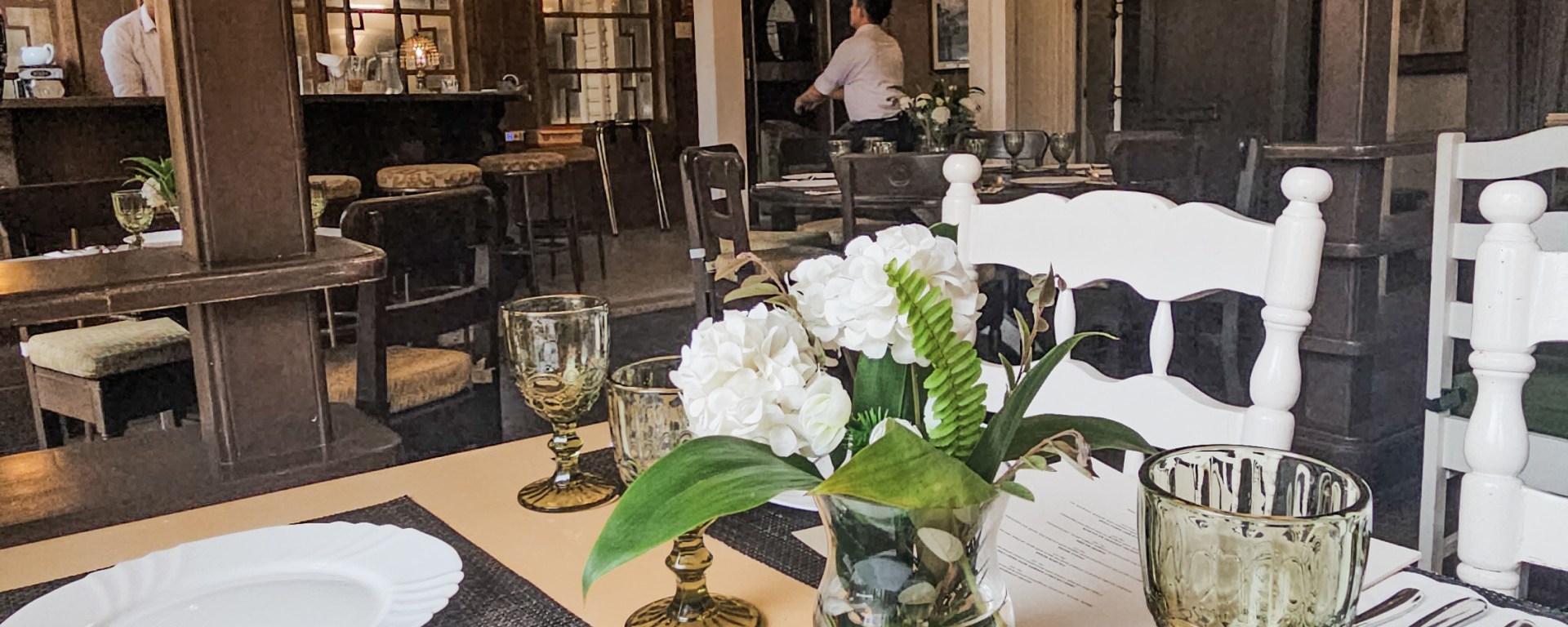
Nestled in a beautiful 1930’s ancestral house lies a beautiful restaurant that offers Filipino cuisine representing dishes from different regions of the country. Tola, the restaurant name, comes from the beloved Filipino comfort soup, Tinola, then shortened to Tola.
With a list of delicious Filipino comfort food from their menu and the beautiful scenery then transports you to the past, the restaurant provides a sensory experience both in taste, sight, smell and touch. Dining at Tola gives you a glimpse of olden days while in the present. Not only are you served with quintessential Filipino dishes but you get to experience a trip to the past.
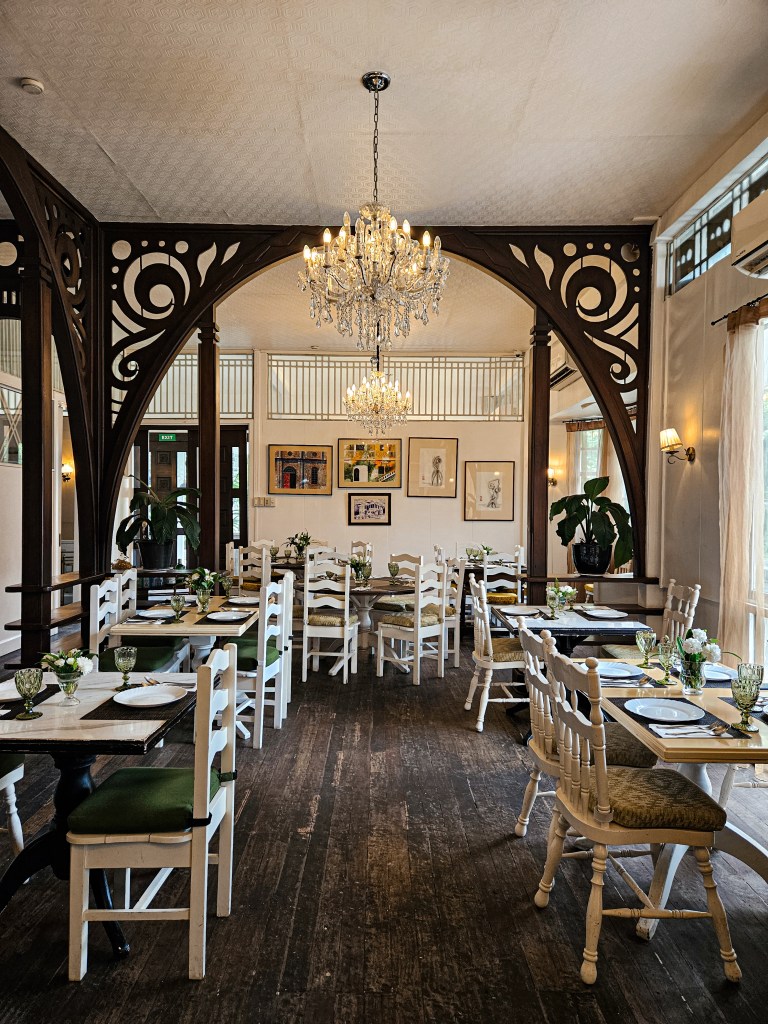
The ancestral house known by many as Balay Oboza was built by Davao’s first municipal mayor, Alfonso Oboza in the 1930s. The house lived on for almost a century and is now transformed into a restaurant. The house was renovated into intricate sophistication perfectly marrying the modern and the traditional Filipino house. With its white painting and beautiful lighting, it exudes grace, simplicity and comfort.
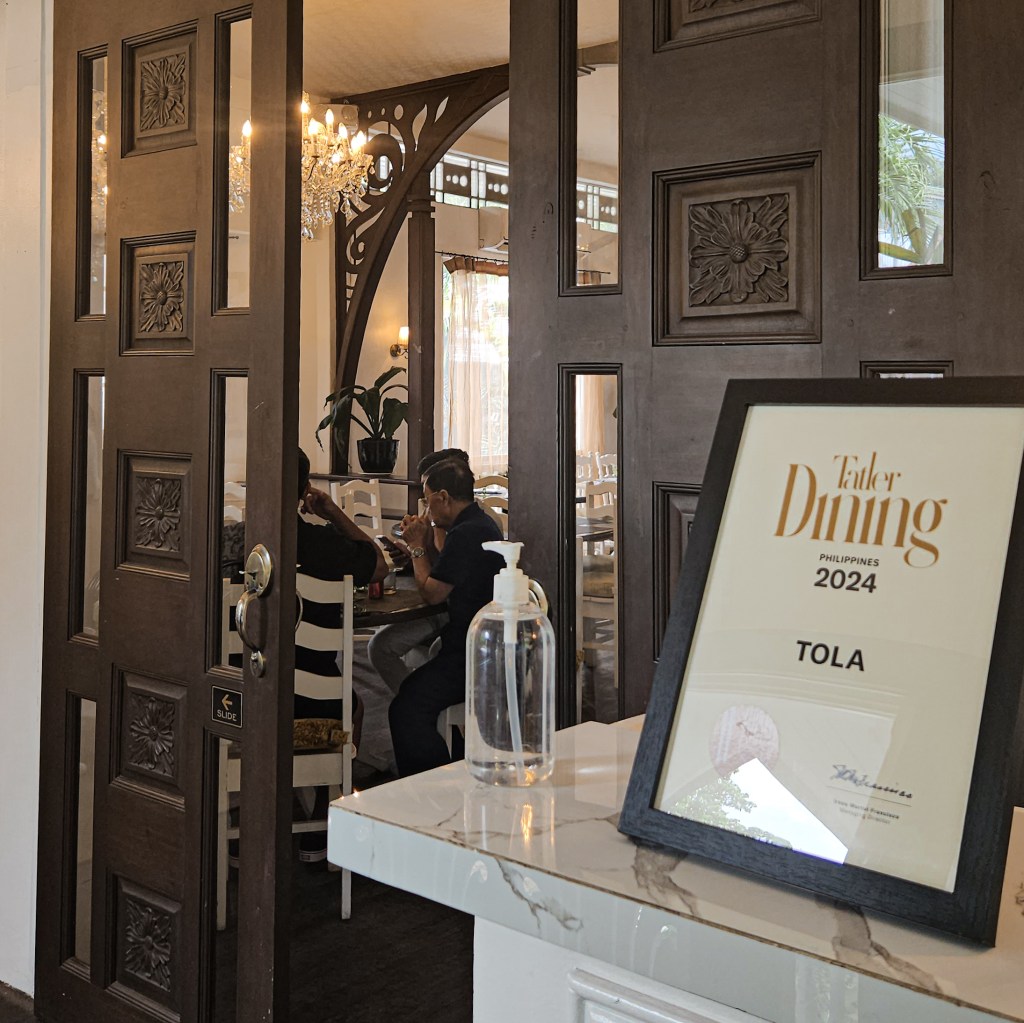
Apart from the interior and the rich history of Balay Oboza, Tola’s food does not fall short as well. They feature comfort Filipino food like kinilaw, tinola, crispy pata and all the other classic favorites. For four years since their opening in 2019, they have been putting Davao City in the map in the culinary space. Along with Clean Cafe, HeyMonday, Huckleberry Southern Kitchen (which is located below Tola), Made Simple Restaurant and Pilgrim, they have been named as Tatler Dining Philippines’ best restaurants for 2024.
Review
This has been my second time dining at Tola but Balay Oboza is not foreign to me. The first time I visited, it was when it used to host a French restaurant. With such a beautiful house and rich Filipino and Davao history, I personally believe it was all for the best to have the space serve Filipino food instead.
The space and ambiance is very nostalgic. The wooded floors and windows reminds me of my grandma’s house. We went here on a Sunday for both times I’ve visited Tola and the quaint and serenity it brings on a slow Sunday afternoon is rejuvenating. Dining there reminds me of after church lunches at my grandma’s house while playing those old timey music. It evokes happy memories.
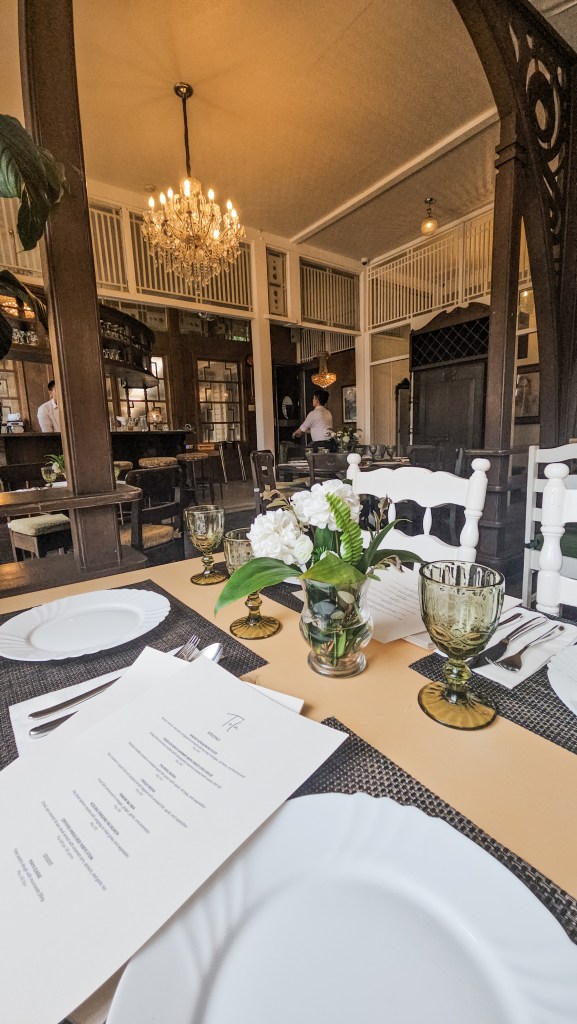
The menu provides familiarity as the food served were mostly Filipino favorites and ensure that Davao or Bisaya dishes in general are well represented. Among dishes are kansi, which is a sinigang and bulalo hybrid soup, sutokil, a Davaoeno way of eating fish standing for Sugba, Tola, and Kinilaw, and Burong Mangga and Suha Salad, which suha (or pomelo) is a native fruit widely found in Davao.
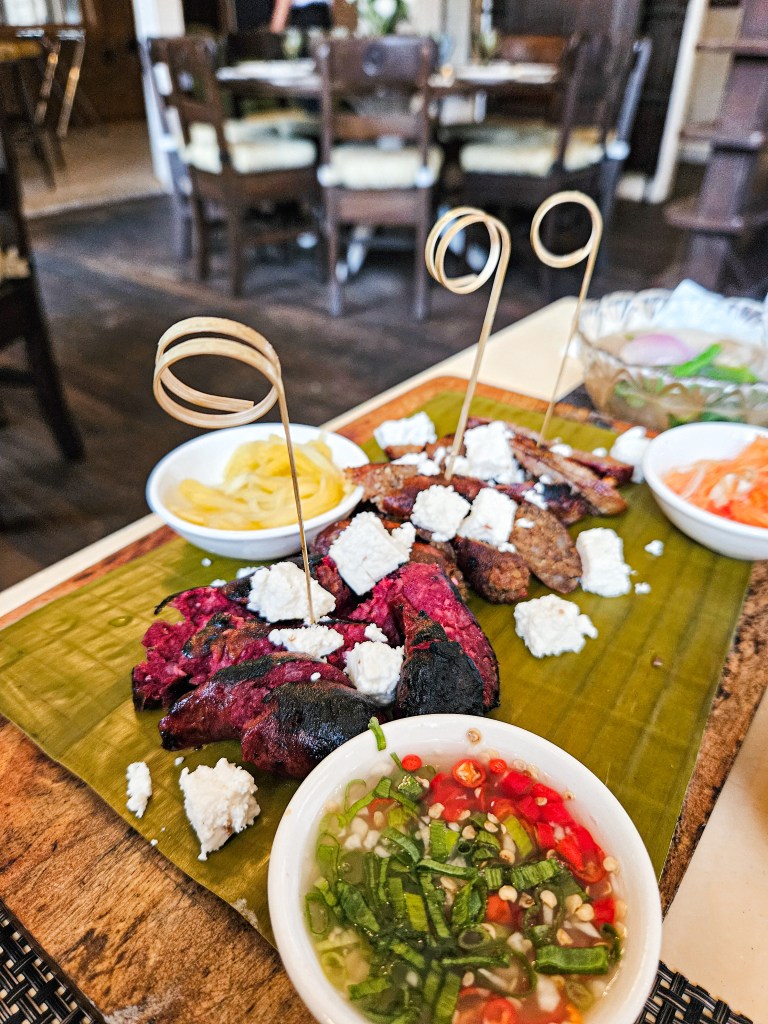
However, we were playing favorites and ordered the following dishes: classic sisig, laing, karekare, sinigang na baboy, chicharon bulaklak, their specials – Davao longganisa plate, and end it with their ube and chocolate lava cake.
From the least to my favorites, I’ll start with their Davao longganisa plate. Their Davao longganisa plate costs P395 with two different variety. One is sweet and savory and the other is the spicy longganisa. My rating for it is just a 5/10. It is packed with flavor but it has an overpowering sour taste. There is an imbalance of whatever ingredient they used that’s making it sour. I suspect calamansi? It is also really dry and was the least consumed. It’s expensive but not the best flavor and quality. It would help if the sourness was reduced and make the meat juicy.
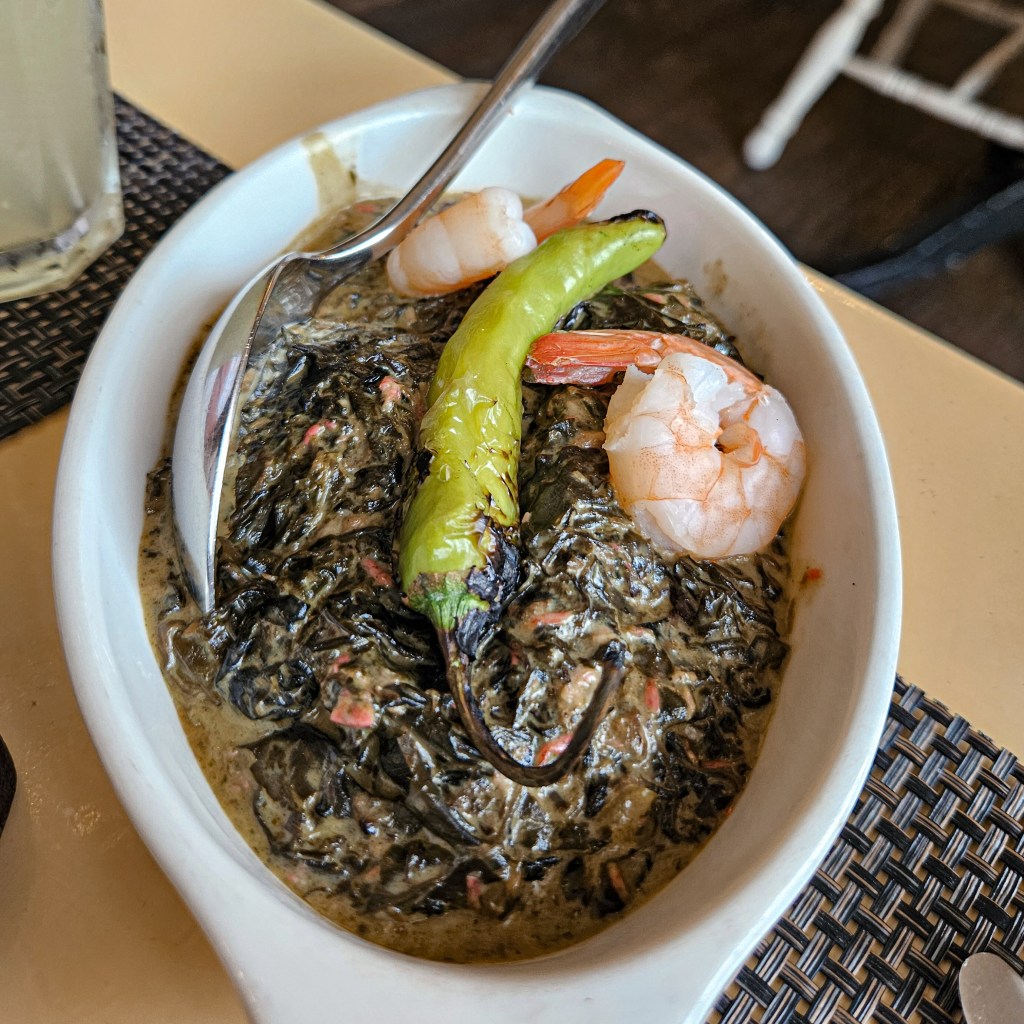
Their laing is a 6.5/10 at a price of P195 for a solo dish. It was sitting too much on the coconut milk that the taste of gabi is overpowered by it. It lacked flavor and the umami taste. I do prefer my laing with flavors from the onion and ginger and have some heat from the chilies. It was underwhelming. If the flavor were balance and allowed the gabi to highlight with some salt and pepper, it would score higher.
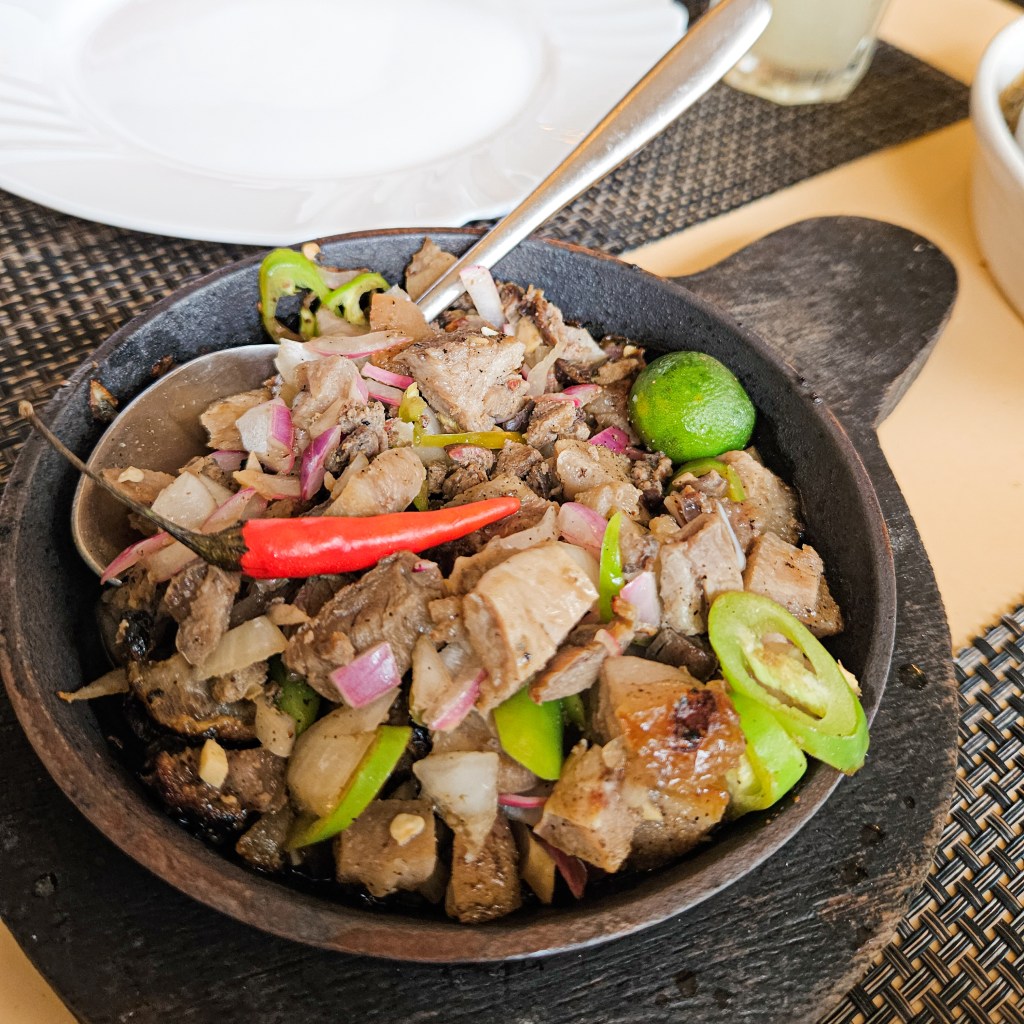
Next is their classic sisig. Their serving size is really small against its price. For P210, you get this tiny sisig serving. It is enough for two people or one hungry person. I find that most of their serving size is disproportionate against its price compared to other restaurants. However as to the taste, I am not a fan of the texture of their sisig. The meat chunks aren’t crispy and it is soft. It almost has a similar texture and presentation of a dried out papait. It was soupy and wet which is unusual for a sisig I am used to. I do appreciate that their sisig isn’t reeking with typical innard aftertaste. I’ll give it a 7/10.
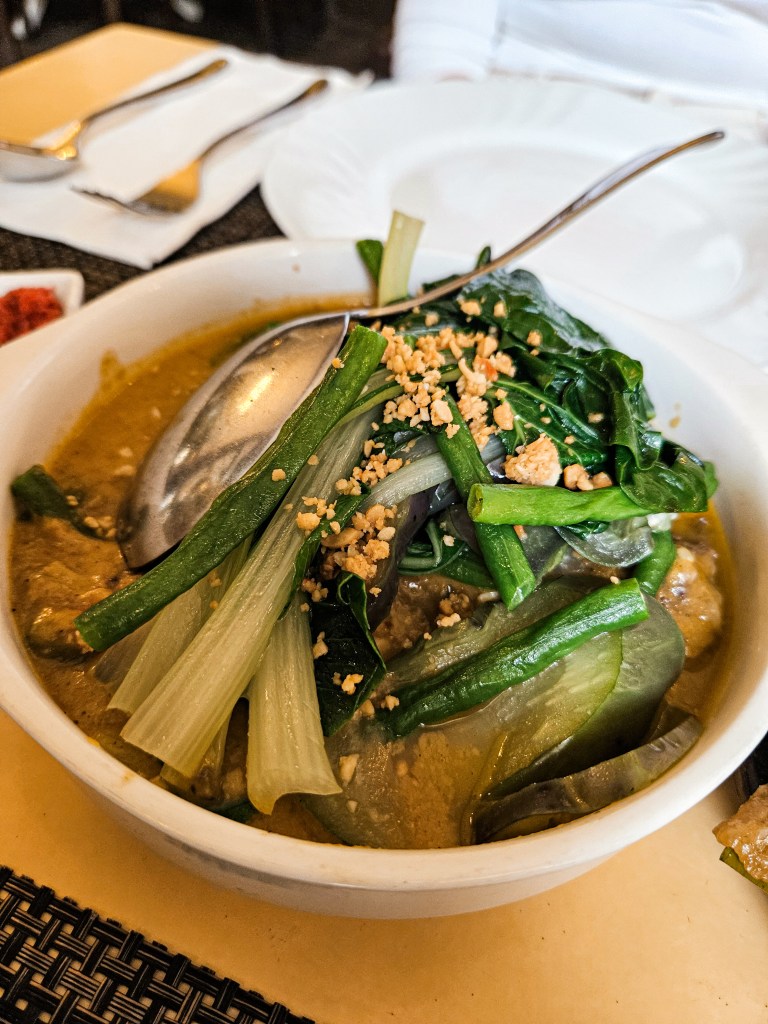
Their karekare is good and very generous with the vegetables. The price is at P430 for a solo size. It is served with three different types of bagoong. It highly elevates the flavor and compliments well with the buttery sweet flavor of the peanut stew. Among the three types of bagoong, the widely paired with is their gisadong bagoong that has a spicy taste. I find it pricey in contrast to its portion size. Taste is good. Is it the best karekare? No, but it is there. Score of 8/10. Though it should be lower as it’s small for its price, I’ll still put it at a high score since I’ll just validate price includes the dining experience at Balay Oboza.
We move on to their soup. I think base on the sinigang and the name of their restaurant, their forte is more on the comforting and savory broth that people love. Their sinigang is a 9/10. A delight that comforts you. It was a follow up order so I was not able to take a picture however it was packed with vegetables and good portion of meat. The meat-to-veggie ratio is great. Price of P300 for small portion size.
We were not able to take a picture of the sinigang as it was a follow up order after finding out we needed something comforting.
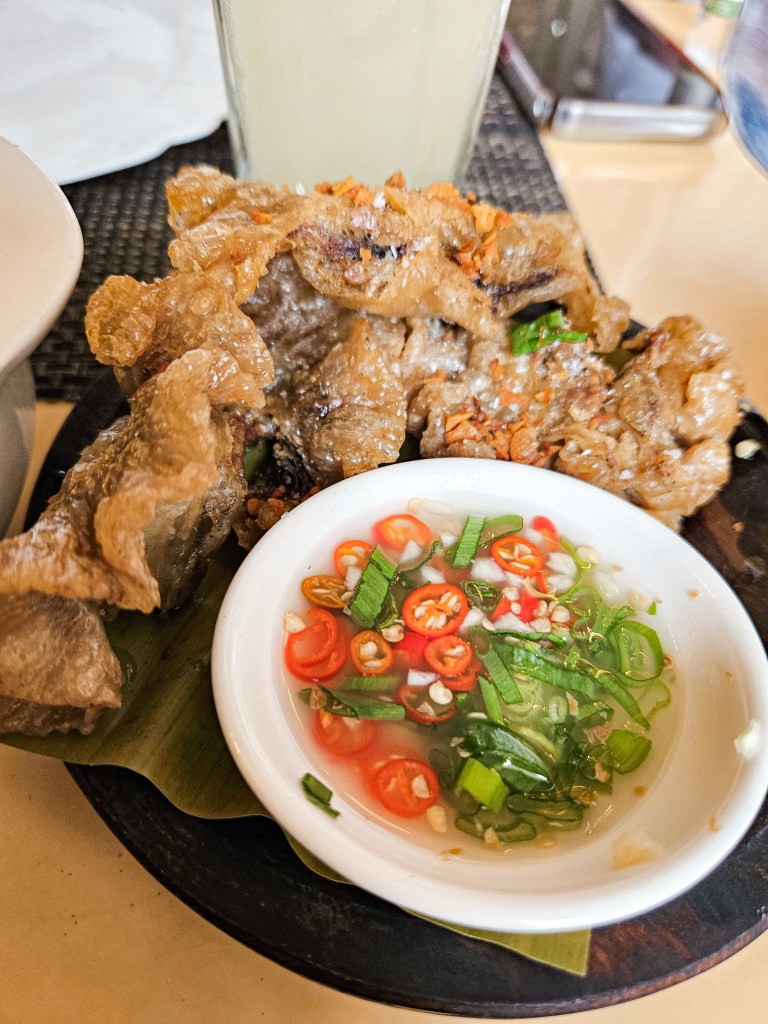
I am not a big fan of chicharon bulaklak overall but theirs is one of the most delicious I’ve tried. The crisp is perfect. It doesn’t have that gamey aftertaste that I dislike the most compared to other restaurants serving this dish. It’s flavorful and not oily and has a delicious spicy vinegar dip. Their chicharon bulaklak is a 10/10. Price is at P200 for a small portion with four pieces.
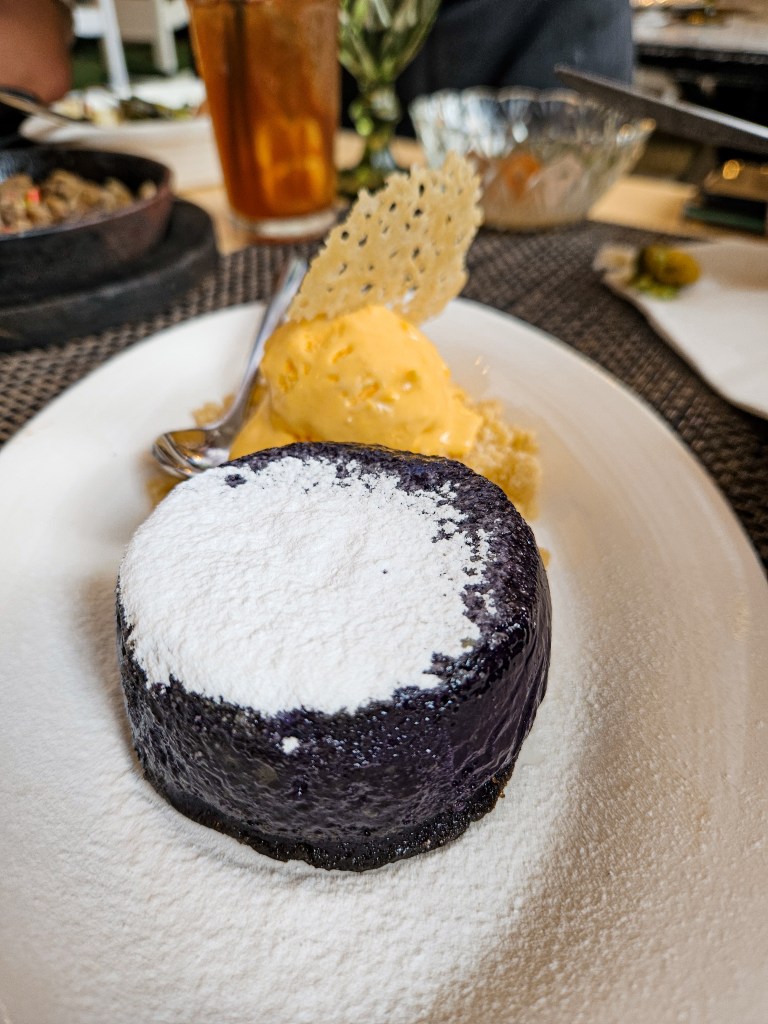
After the delicious meal, we end it off with two serves of ube and white chocolate lava cake. Their ube and white chocolate lava cake is one of my favorite dishes from their menu. It’s a fluffy ube cake that’s oozing with molten ube and white chocolate goodness with a side of Filipino queso ice cream. Their ice cream is home made but I feel like the inspiration for the ice cream is the beloved ice cream sold at parks by street vendors. It’s a perfect harmony of sweet and savory. It’s also really Filipino as you can taste and smell the margarine from the cake. It is a very notable and specific ingredient for ube dishes that makes Filipino ube delicacies stand out among others. It’s P265 per plate. A luxury but definitely a 10/10 for me.
Tola is an experience for those visiting in Davao as it is a dining experience but feels like hopping out from a time machine to the 1930s. It also showcases a variety of Filipino comfort food that is a nice introduction for foreign visitors. Though not a fine dining restaurant, it does come expensive and for the general diners, it might be a luxury to dine to. However, if you do have the budget to spend, I would recommend to visit and experience Filipino dining at a nice setting.
- Payment Method: Cash, Credit Card Payment
- Budget: P1,500 to P2,000 per two pax (with service charge)
- Business Hours:
- Type: Filipino
- Facebook Page: https://www.facebook.com/toladavao?mibextid=ZbWKwL
Want me to try out a restaurant and make a review? Recommend a restaurant and I’ll try it for you. If you like this post, please like, share and follow the Voyaging Accountant on Facebook.
 Eats Me, Jax!