

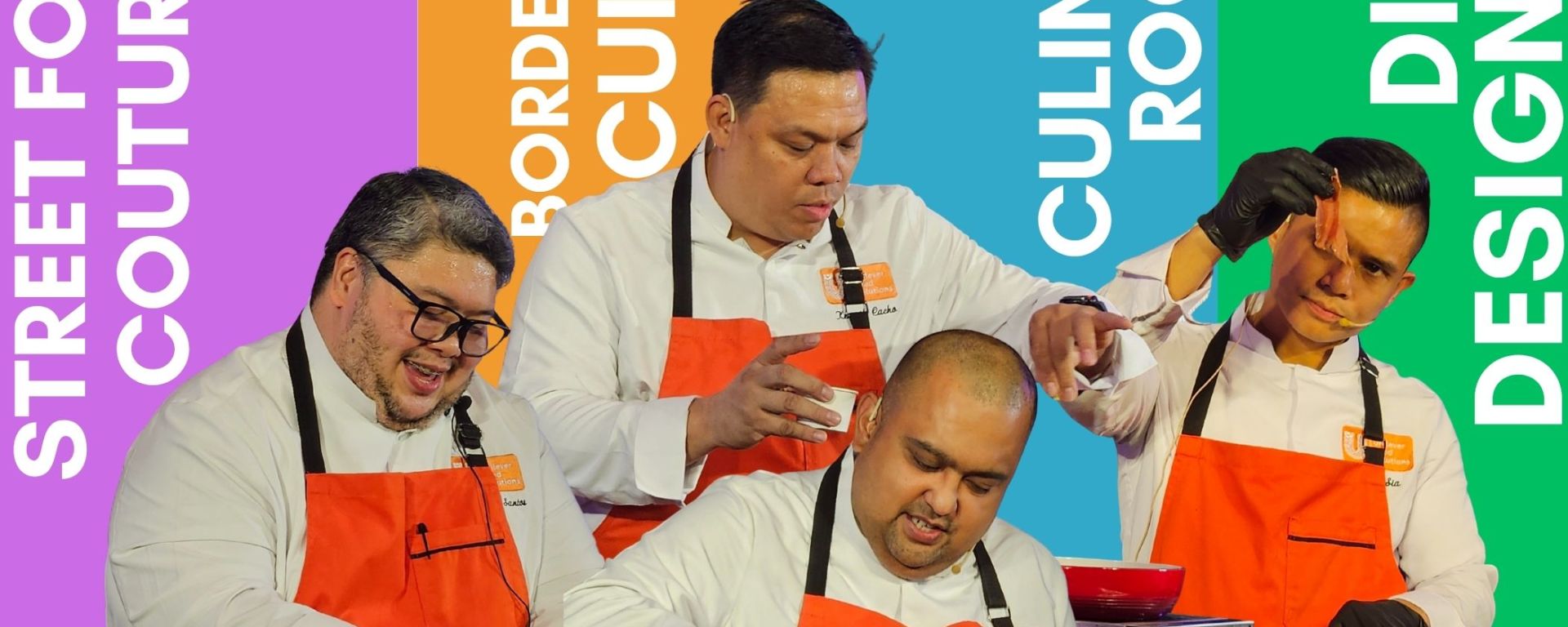
Mindanao is a food destination with untapped potential that can unlock a massive boost in food tourism and hone a strong food culture. With its extensive regional cuisines and a wide variety of unique local ingredients, it’s just a matter of time before our local dishes become the next big thing.
Seeing these potentials, Unilever Food Solutions included Davao City in their VisMin leg to showcase dishes, methods, guides, and new concepts through their Future Menu 2025’s Taste Kitchen event. This event was held on Tuesday, October 7, 2025, at Acacia Hotel.
The event covered the entire afternoon, filled with fun games, live demonstration of culinary techniques, dish sampling, sharing of the four core concepts that keep you ahead of the trend, and a short talk show with guests from South Mindanao’s food and service industry like Chef Jeramie Go of Pilgrim’s in Davao, and Hannah Mamon of SG Farms in South Cotabato.
As a foodie, I am just a person from the outside looking in, but this event has got me excited for the future of Davao and its neighboring cities. There were so many things presented during the event that can actually inspire professionals or home cook hobbyists to create amazing dishes from the four trends discussed by each chef who presented these ideas.
There were four core trends discussed: Street Food Couture, Borderless Cuisines, Culinary Roots, and Diner Designed.
Street Food Couture
Chef Carlo Felipe Aluning
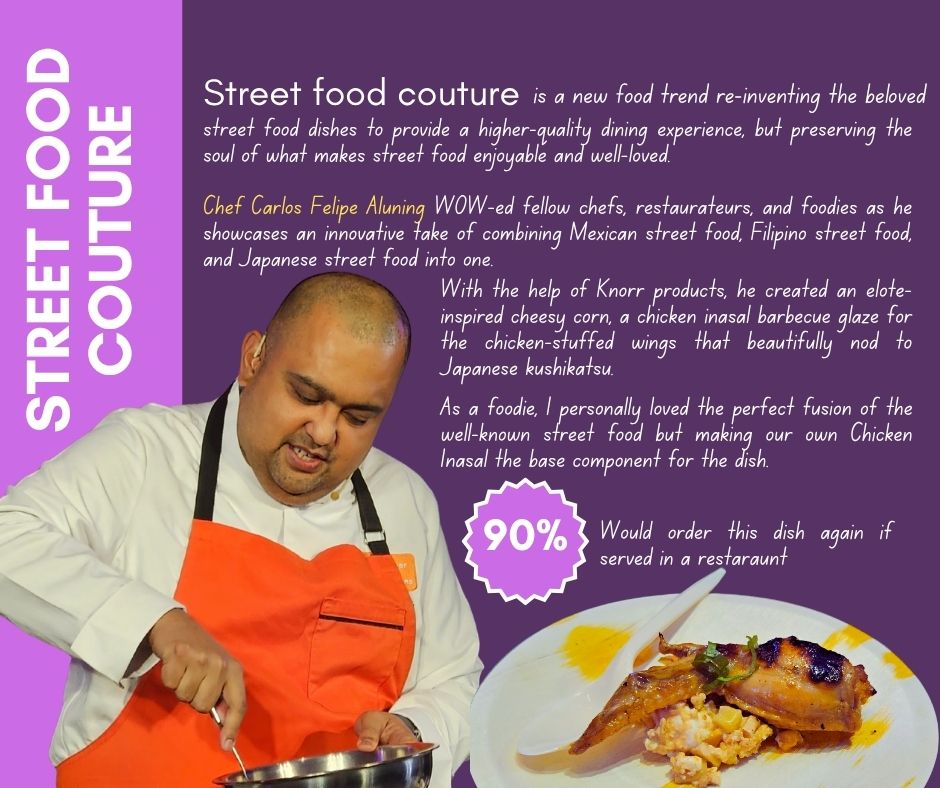
Chef Carlos Felipe Aluning showcased his culinary skills as he prepared an elevated version of a celebrated Filipino street food – the grilled inasal chicken. As he prepares the dish, he walks us through the Street Food Couture concept. Each country has its own distinct street food culture, and the new trend is elevating this experience and adding these as a dish to your menu. As he presents this concept, he wows the audience as he creates an inasal barbecue sauce, lathers it on a deboned chicken wing, which he stuffed with a delicious ground pork mixture. He made a mountain of elote-inspired cheesy corn as a base and placed the grilled chicken wing on top. The dish is a culmination of three street food dishes across different countries: Mexican Elote, Filipino Inasal, and Japanese Kushikatsu. Street Food Couture refines street food favorites. If served in a restaurant, I would be 90% drawn to order this.
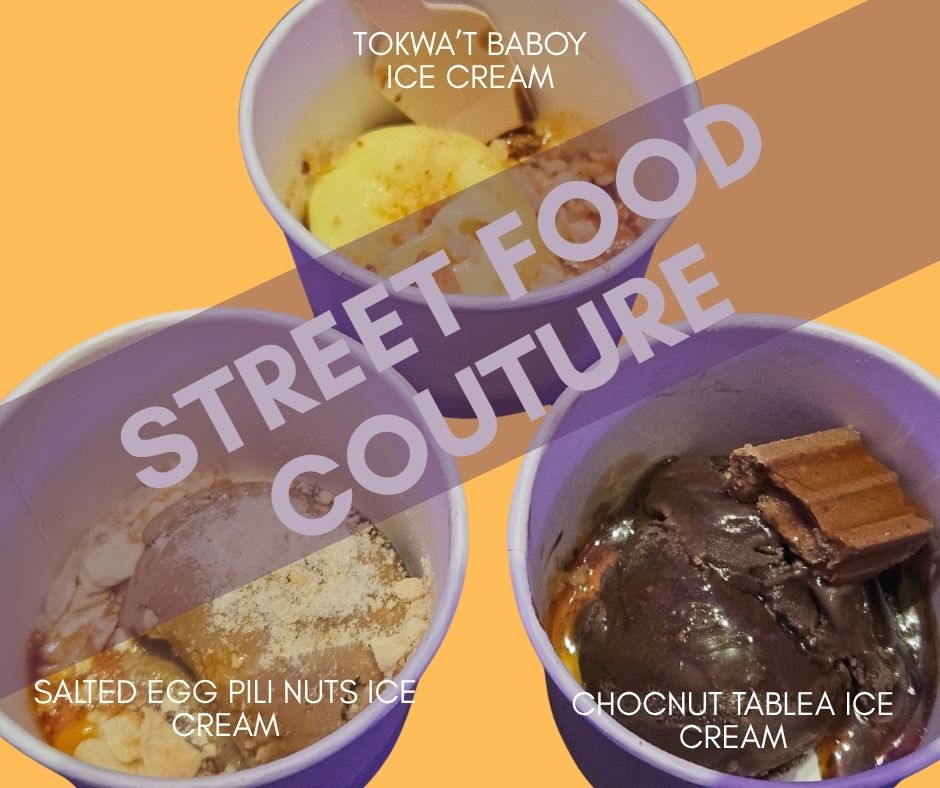
Part of the street food couture was the experience of trying three new ice cream flavors that are proudly Filipino. They wheeled out the famous Filipino “dirty ice cream” cart and served Tokwa’t Baboy, Chocnut Tablea, and Salted Egg Pili Nut Ice Cream. I tried three of these flavors and would be 100% drawn to order this out of curiosity when served in a restaurant.
My personal favorite out of the three was the chocnut tablea, as it is reminiscent and nostalgic of a childhood snack. The flavors were also well-balanced with a smooth consistency and nice mouthfeel. What was unique and oddly enjoyable was the Tokwa’t Baboy. The flavor is leaning towards a hopia na sibuyas. It’s salty and sweet yet oddly enjoyable. The salted egg pili nut was a lot of people’s favorite, but personally, it just tastes like a really good salted caramel to me. But there was a crunch that I liked that was added to the ice cream!
The genius you can make out of your typical street foods!
Borderless Cuisines
Chef J Brando Sia
Chef J Brando Sia enthusiastically explained the Borderless Cuisine concept. It’s the respectful take on creating food dishes inspired by other cuisines. Whether it be the culinary practice or the dish itself with a hint of Filipino signature on it, this is Borderless Cuisine. It’s food fusion.
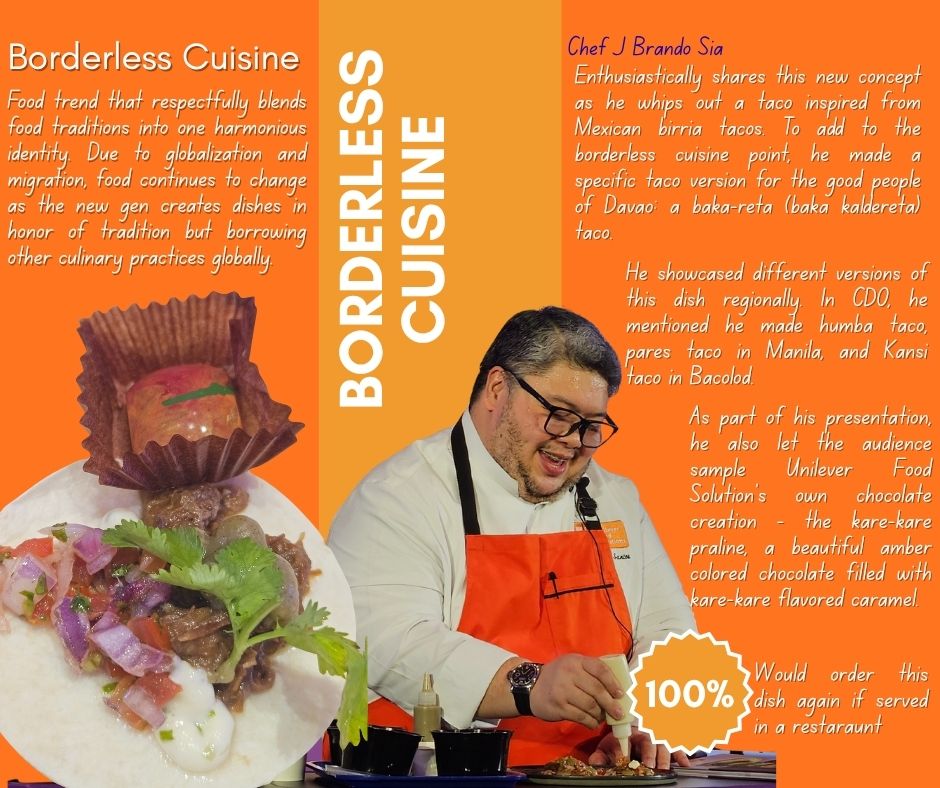
As this was their third leg for Vismin after visiting CDO and Bacolod, he prepared his version of Mexican tacos with a beautiful nod to Davao by making a taco version that has a similar flavor profile to a bakareta. The original take for this is a beef pares taco, having different flavor iterations in each city visited. Like in CDO, he prepared a humba taco, and in Bacolod, a kansi taco. One of the things that I love about this version of tacos is the way he used eggplant as the main flavor for this dish. Retaining the smoky flavor of the grilled eggplant, he made it into a puree and used it as an added flavor. It provides a nice cut between the sweet and fatty flavor of the beef. If this were on a menu in the restaurant, I would 100% order this. The more regional, the more intriguing it is!
As an added dish, he gave us all a kare-kare praline. It’s a chocolate filled with kare-kare flavored caramel with peanut butter and patis. The chocolate encasing has an amber color with a beautiful pattern. The flavor of the chocolate and the filling was nice, but didn’t really have that karekare signature. At the end of the event, we were given a whole chocolate box set with Filipino-inspired flavors like sinigang chocolate and sisig chocolate. This could definitely be the next Dubai Pistachio chocolate!
Diner Designed
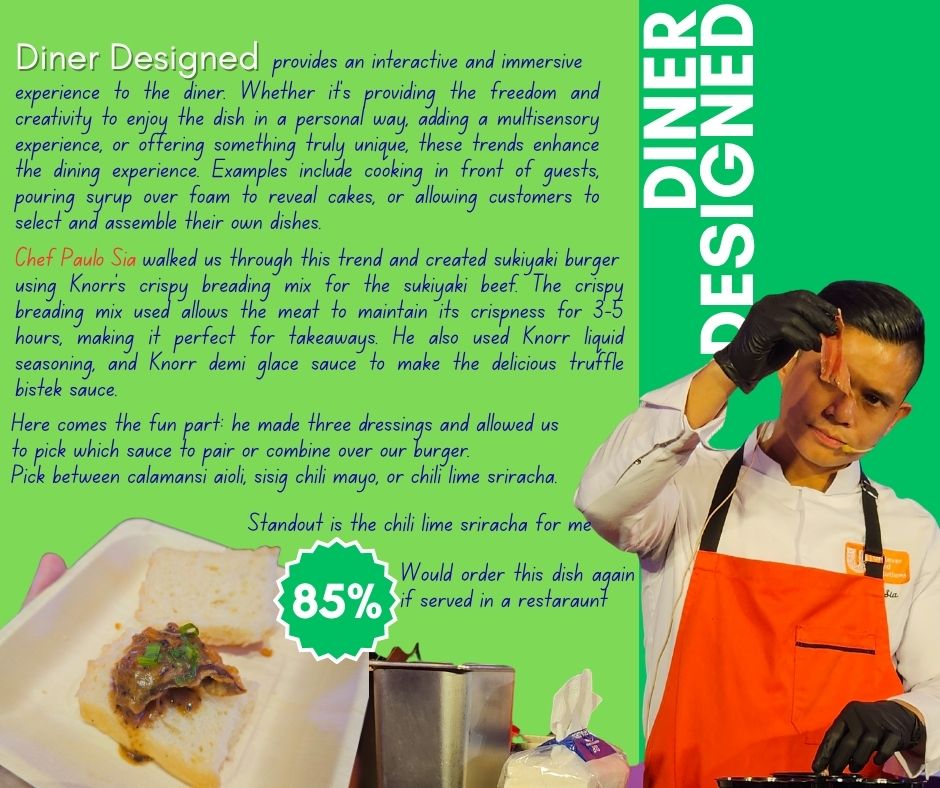
Chef Paulo Sia
Diner Designed is a trend concept that allows diners to be involved. It lets your plate become the canvas and the dish your palette and paintbrush. The limit? Your creativity. This is what Chef Paulo Sia explained with the new trend. This allows a more immersive and interactive experience in dining. This includes build-your-own dishes, live cooking, and adding some sort of spectacle and entertainment to your dish. While discussing, he prepared an amazing deep-fried sukiyaki burger that had a truffle bistek sauce as demi-glace. The sukiyaki had a very similar texture to a chicken fillet. For dressing, he provides three options to pick from: calamansi aioli, sisig chili mayo, and chili lime sriracha. A lot were drawn to the chili lime sriracha, having some spiciness to it, including me. If served in a restaurant, I would 85% order this dish. However, the bistek sauce as a burger sauce is an amazing idea that I will replicate at home.
Culinary Roots
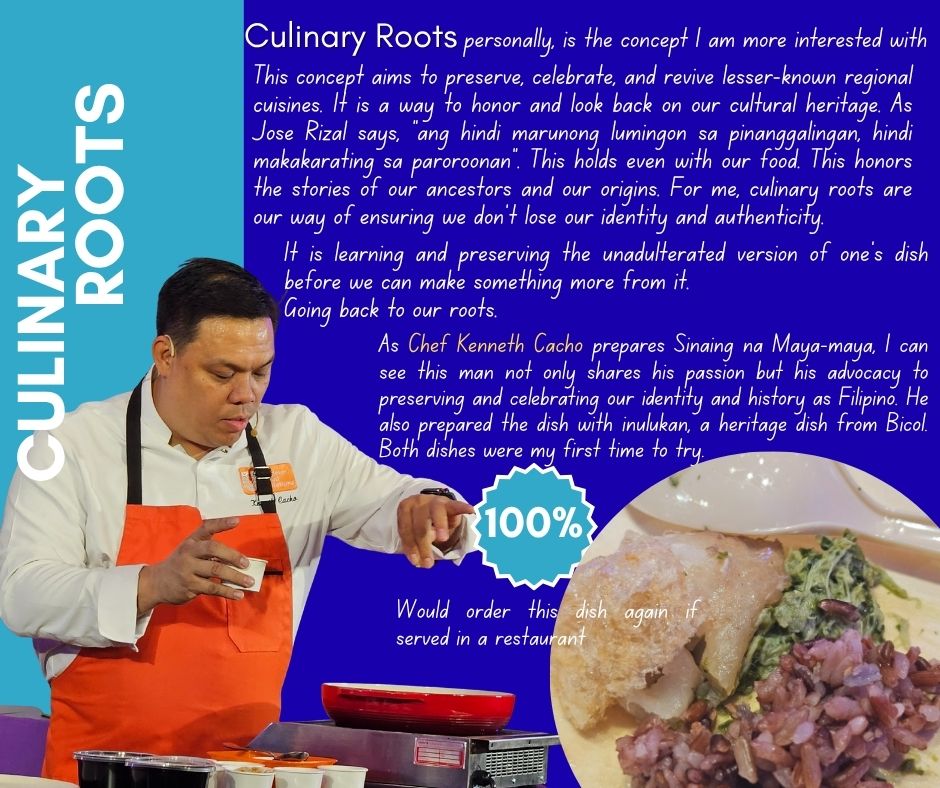
Chef Kenneth Cacho
Last but not least, my favorite trend concept that I hope would take off more than the others. This is the food trend that celebrates and revives the lesser-known regional dishes. It is to pay honor to our culinary roots. Chef Kenneth Cacho explains this concept by sharing how we can put our own signature, but humbly pay respect to a dish’s culinary roots.
As he discusses this topic, he gladly prepares and explains how one traditionally makes Sinaing na Tulingan but replaces the Tulingan fish with Maya-maya. He also prepared a well-loved dish by Bicolanos called inulukan. Both of these dishes were my first time trying. While tasting the dish, there was a moment of self-reflection that I have little knowledge of our own regional dishes, which would be my personal goal to learn more and discover heritage dishes. If served in a restaurant, I would 100% try this, especially if there was a brief story or description on the menu.
After gaining valuable insights from this event, I hope that those in the food industry leave not only inspired but also empowered to be more daring and experimental in the kitchen. As the Unilever chefs emphasized, Mindanao is a vast island rich with untapped culinary potential. It is a treasure trove of flavors waiting to be discovered. May this event serve as a catalyst, challenging every attendee to push boundaries, embrace local ingredients in new ways, and lead the evolution of Davao City’s dining scene. Who knows? The next big thing in the culinary world might just come from someone attending this event.
 Eats Me, Jax!