

Updated – December 16, 2025
Last June 2025, I joined a chocolate crawl in Davao that allowed me to try out different versions of culinary innovations from one common ingredient – the cacao. It was an eye-opening experience, leading me to believe that there is so much to discover in the city of Davao. Whatever we see on social media is just the surface level of what Davao’s culinary scene can offer.
So, I started researching and looking for lesser-known culinary gems hidden around Davao City. These are dishes that rarely get discussed and often go unnoticed because they’re overlooked by social media and buried by mainstream food trends, or simply because they cater to a particular niche market.
I created a personal criterion on what to cover:
- It’s a lesser-known dish or drink that caught my curiosity
- Can be from a particular cuisine that’s uncommon in Davao City
- Cultural or historical background is interesting
- The preparation or ingredient is different
- Only served specifically by a certain restaurant or with no known iterations in the city
WARNING!!!!
The dishes I will cover are dishes that aren’t necessarily for everyone’s palate. I’m actually the type of person who is curious and passionate about food, so I would try anything, as they say, “for science.” Some of these items may have a really niche market, and I can personally say, as I’ve tried them, they can be an acquired taste. But the point is to expand our palate dictionary and discover what’s out there. You’ll never know what you love until you try it.
It’s also another way to rediscover Davao as a local through a different lens.
If you’ve stuck around long enough to read my blog entries, you’ll know that I try to quantify my experience so people can determine the data. I’m rating it from 1-5 on how easily one can adapt to the flavors. Think of 1 as a very niche market, and it would take time for you to get acquainted with the flavor, or not at all, and 5, wherein it can easily be enjoyed even if you’re not a foodie or a curious cat like me.
Bandung Latte
Humble Table, 8 Washington Street, Poblacion District, San Pedro
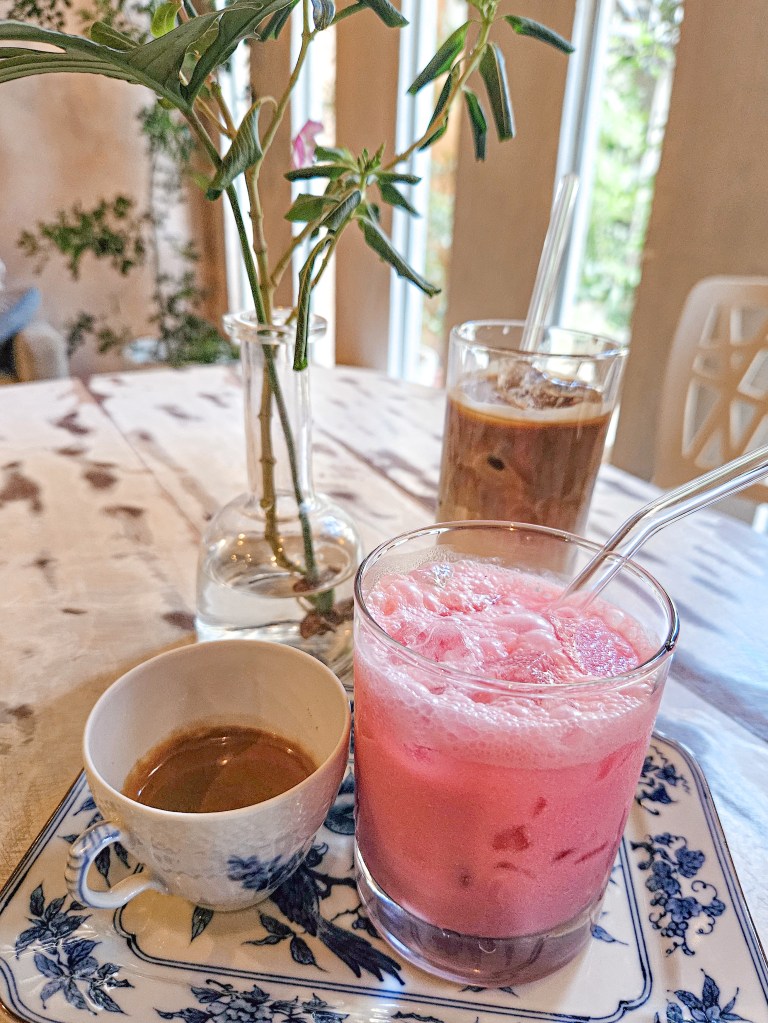
Humble Table is a well-known and beloved cafe, renowned for its vintage-style aesthetic and cozy, warm ambiance. When you scroll through social media and check information about them, I find that there are fewer mentions of a unique drink they offer.
It’s called Bandung Latte, which is a popular coffee drink in Southeast Asian countries like Malaysia, Singapore, and Indonesia. What’s intriguing about this drink is that it tries to marry the flavors from roasted coffee beans to a fragrant, floral rose milk.
It’s a drink that has a very distinct color because it’s pink! It’s made out of rose syrup, usually made from rose extract, milk, and water. It has an uncommon flavor as well because it has perfumey and floral notes to it.
Personally, I think not everyone would enjoy this drink. However, for those who are coffee lovers who enjoy trying something new and are familiar with coffee and fruit combinations or coffee-tea combinations, the flavor can easily be acquired. Tea drinkers who enjoy floral teas like Jasmine, Lavender, and Hibiscus could also adapt to the drink.
Vietnamese Egg Coffee & Egg Matcha
Kiks Davao, Cor Rustico, Veloso Street, Obrero
If you want to experience the flavor and have a preview of Vietnam’s coffee culture without leaving Davao, then visiting Kiks Cafe or Kiks Davao is for you.
Of course, Vietnam is often associated with its iconic egg coffee, which is a hot beverage made with strong coffee topped with a creamy foam of whisked egg yolks and sweetened condensed milk to be a substitute for fresh milk. Historically, this drink was created in the 1940s, during which milk was scarce because of war rationing, when Vietnam was occupied by French colonial rule. In response, a bartender named Nguyen Van Giang invented egg coffee as an innovative alternative that is now a renowned drink loved by many people in the world.
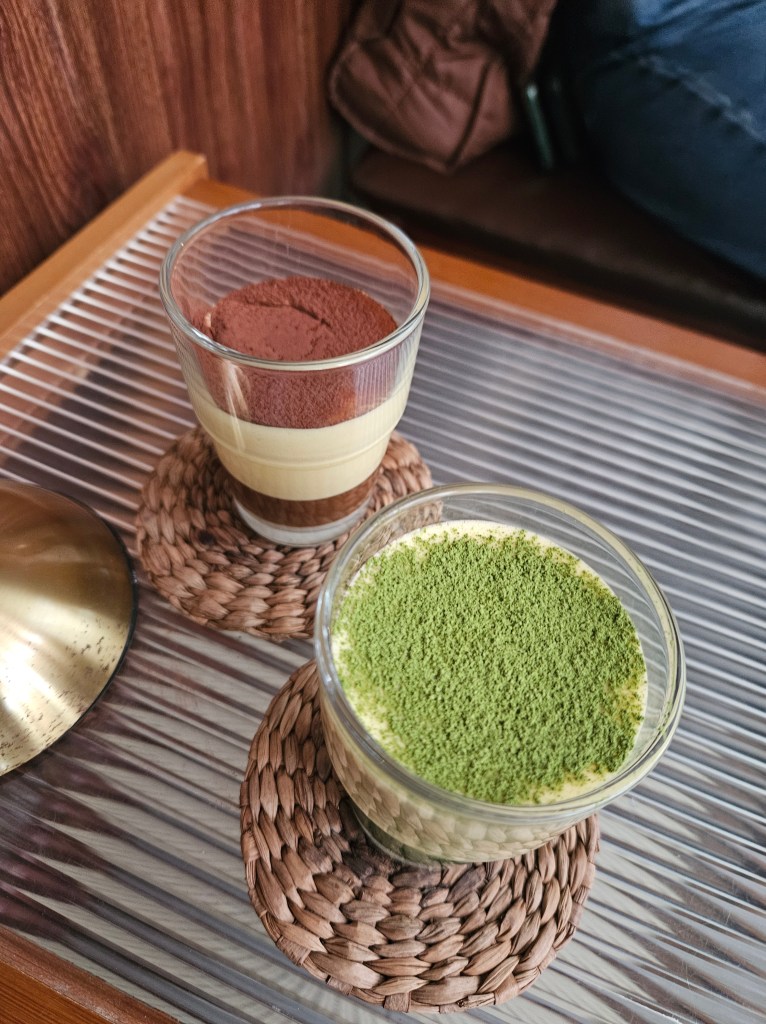
Kiks Cafe brings this iconic egg drink to the table. And to provide their own touch, made a version suited for matcha lovers. They introduced egg matcha on their menu. Though they are not the original inventor of this drink, other cafes, especially in Vietnam, offer this and call this matcha trứng. It’s a fun cultural fusion between Vietnam’s egg coffee and Japan’s matcha.
For Egg Coffee, if you can get past the thought of adding raw eggs to your drink, then the taste is quite easily adaptable. It has a similar taste to a hot mocha icing or a mocha cake.
The Egg Matcha has a very unique flavor profile. It’s grassy yet tastes like a pudding. Imagine green tea-flavored pudding. Personally, I had to adjust to the drink and couldn’t figure out if I liked it or not. Matcha in itself is already an acquired taste, but perhaps matcha enthusiasts would like this. It’s less sweet and leans towards the grassy and seaweed taste of matcha.
Steak Pie
Blarney’s Irish Pub, V Mapa Street, Corner Taverna Street
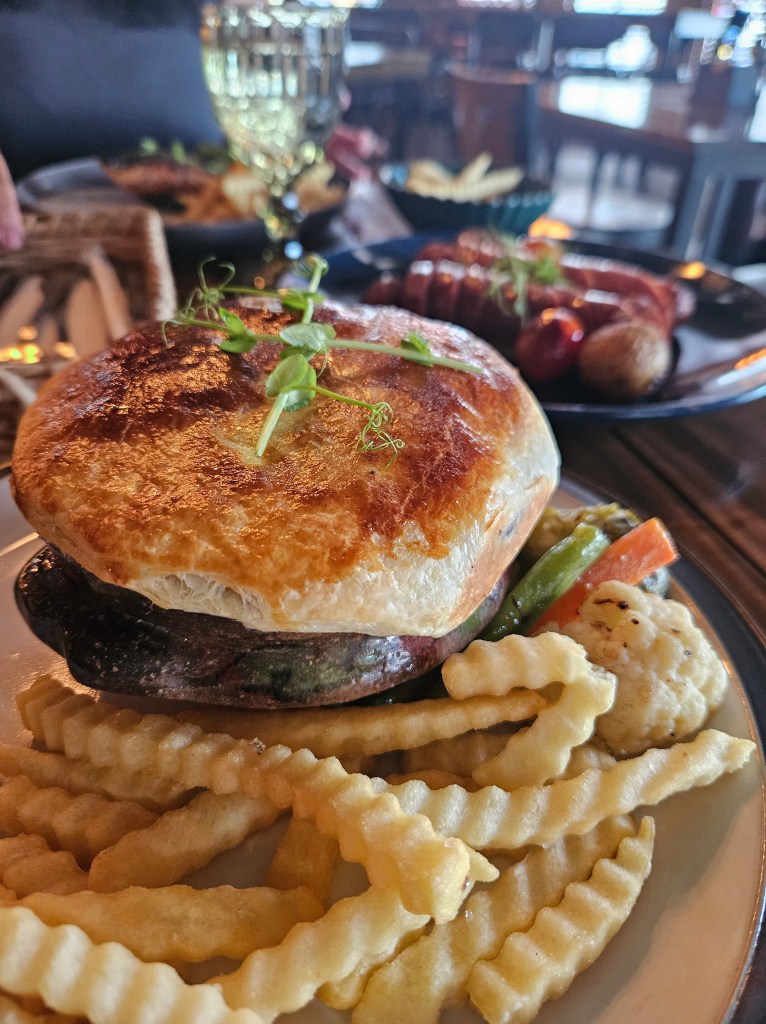
There are many pies in the world, but one I didn’t know I needed to taste is a savory pie called a Steak pie. Meat pies are a big part of British Isles cuisine traditions. They have different versions of it, and one I have graciously tried is an Irish one. I didn’t need to fly to any countries because Blarney’s Irish Pub offers them.
It is made out of beef cuts stewed in a thick and delicious gravy (usually has stout beer like Guinness added), then topped with a flaky puff crust to make a pie out of it. If you’ve ever tried dishes like chicken pot pies, shepherd’s pie, or other meat pies, then you’ll easily get acquainted with the flavor.
Trying this out gives you a preview of what Irish pub foods are like. If you are old enough and don’t have any problems with alcohol, then eating this with a glass of Guinness or your choice of poison (my choice of poison – Apple Cider) then it would be a great pair for the dish.
The flavor is not complicated, and the gravy, despite its differences from Filipino gravies, can be easily enjoyed.
Braised Rabbit or Coelho Estufado
Bairrada Churrasquiera, The Compound, Tulip Drive, Talomo
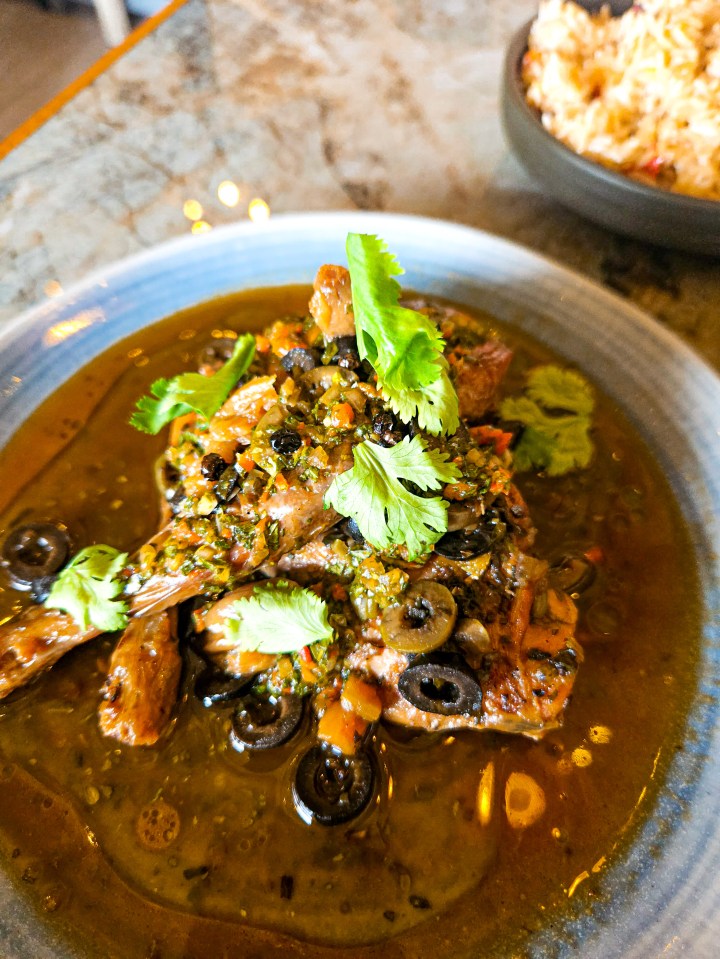
Coelho Estufado, or its English translation – Braised Rabbit – is a common Portuguese dish. Rabbit, in countries like Portugal, is an alternative source of protein that belongs to animals that are considered ‘game‘. They are called ‘games’ because these animals are hunted for food or for sport.
Rabbits are a good source of protein, to the point that during 2020’s, there were several studies conducted in the Philippines to see the viability of rabbits as an alternative source of meat in case the shortage of pork continues due to the African swine flu.
Amazingly, you can try what rabbits taste like by going to Bairrada Churrasqueira in Davao City. They prepared it with a different style of braising. While Filipinos typically use soy sauce and vinegar to braise meat, like in adobo, this dish uses red wine and herbs to provide flavor and aroma to the dish. It also serves a generous amount of black olives, which are commonly disregarded on common dishes that have them, like pizzas and salads.
The rabbit dish has a similar texture to chicken, with threads similar to pork. The flavor profile is close to a chicken with just a hint of a sweeter aftertaste. This dish will require some getting used to and may be too exotic for some.
Lamingtons
Bramble, 115 P Pelayo St, Poblacion District
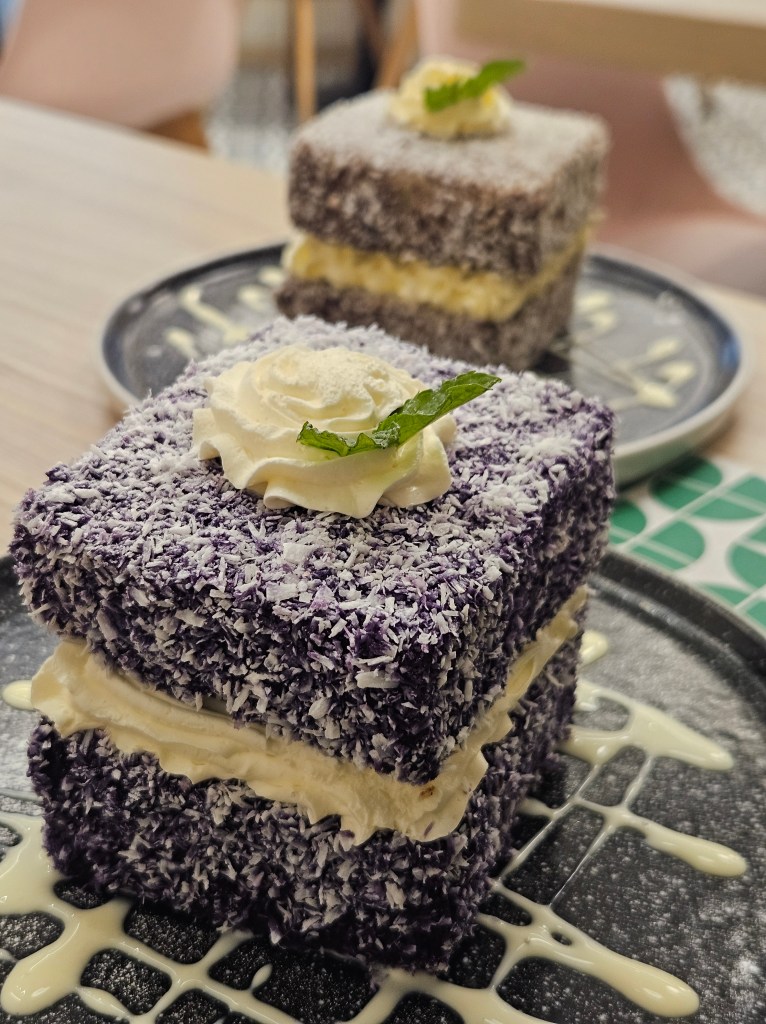
With the growing list of cuisines in Davao, finding an Australian dessert is like an oasis in the middle of a desert. Lamingtons, or Lamington cakes, are an iconic, decadent treat famous in Australia. They’re made of light sponge cake dipped in chocolate syrup and coated with a layer of desiccated coconut.
There are many origin stories for this cake, but a lot of accounts link to a Queensland governor who served from 1896 to 1901. One account indicates that Lord Lamington had unexpected guests; however, he only had stale sponge cake in his cupboard. So his chef had to improvise and coated those stale sponge cakes with chocolate syrup and powdered them with shredded coconut to serve to Lord Lamington’s guests. You can say coconut was the culinary trend at the time because it was imported from Europe. Word got out that Lord Lamington has this coconut-coated cake, which became the trending thing and is now an iconic Australian delicacy.
With Bramble, they served their Lamingtons in their original form – chocolate-coated – and a Filipino version with ube coating. I preferred the ube-flavored one to the original Lamington. It is very reminiscent of a panaderya’s ‘double body/buddy’ but with a very cakey consistency than bread.
Champorado Latte
Balay Juice and Coffee Co, Cor. Palma Gil & Guzman St., Bo. Obrero
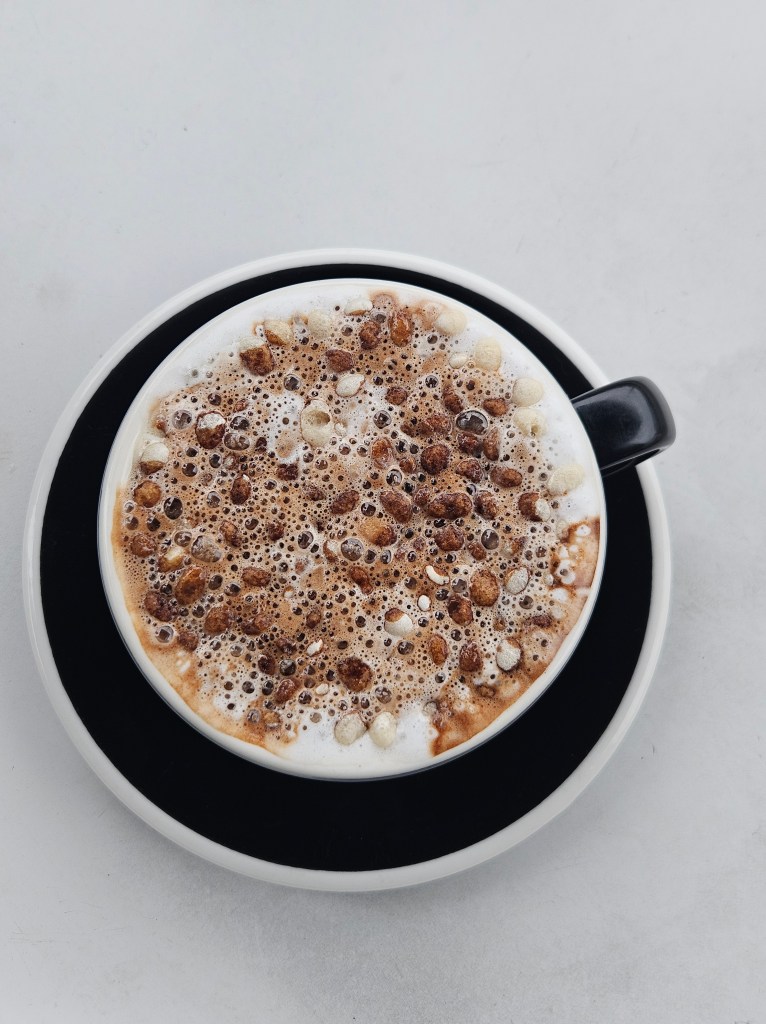
Champorado is a famous Filipino dessert or, for some, a breakfast food. It is a sweet chocolate rice porridge. The origin of champorado dates back to the Spanish colonial period. Through the galleon trade, Filipinos were introduced to chocolate. The Mexican version, ‘champurrado’, is a chocolate-based drink. During the Spanish colonization, Filipinos likely created their own version, adapting from Mexico’s champurrado. Our ancestors must have changed the recipe and adapted it to what was available in our country, and based on our local taste.
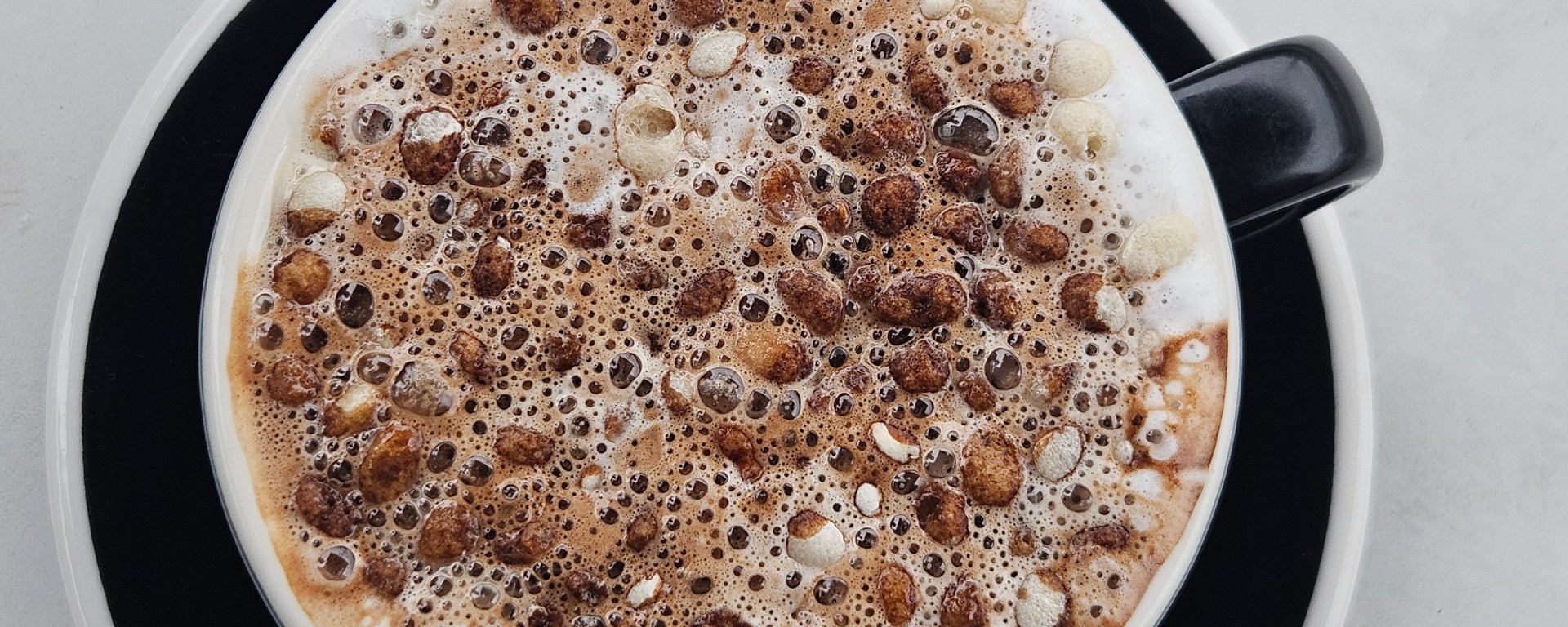
Now, there have been many versions of champorado. I have seen iterations of champorado in different flavors like ube and matcha, and of course, the discourse of whether adding dried fish is valid or not. However, what caught me off guard was this creation of Champorado Latte. It is a genius reimagining of this delicious dish, but transformed into a coffee.
There are two options for preparing this: either hot or iced. I prefer selecting hot as it allows the rice crispies to soften and provide a similar experience as eating an actual champorado. Balay’s mix is actually really delicious. The chocolate and coffee go well and provide a new experience of trying Champorado while caffeinated.
Kaya Toast
Nanyang, SM City Davao
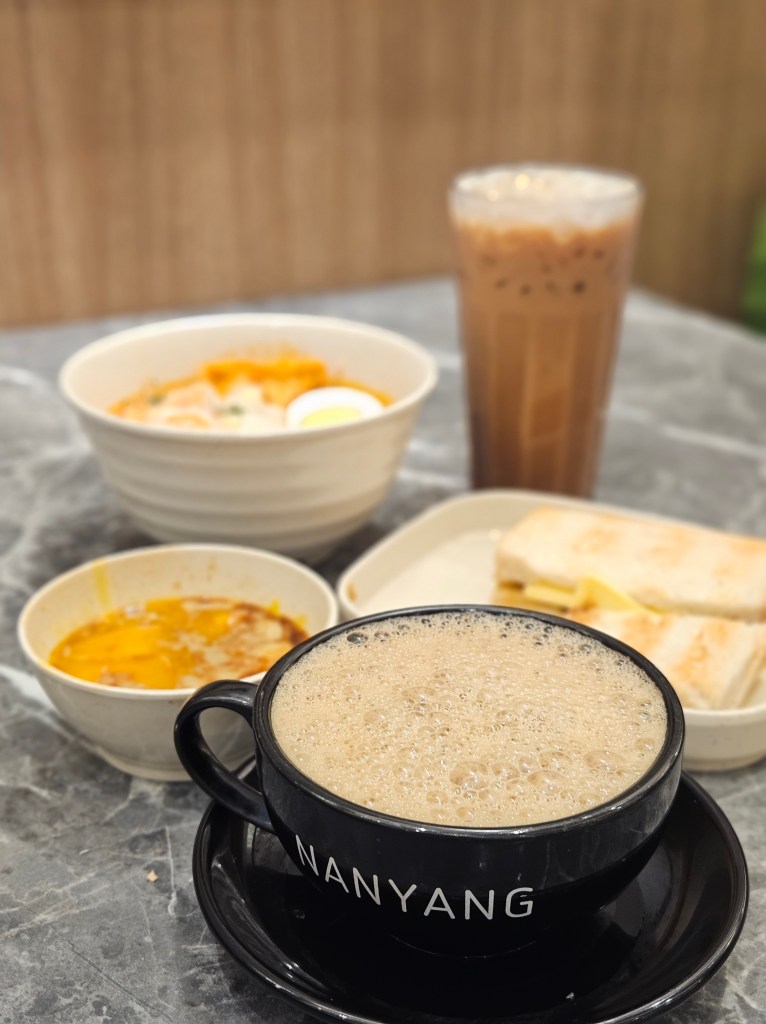
Like Champorado, Singaporeans have their own dish to enjoy for breakfast or as a snack. This is called the Kaya Toast. Kaya Toast is a simple dish, but it is highly praised and loved by Singaporeans. It is made out of bread, either toasted or grilled, spread with a thick slice of butter and kaya jam. This dish is then dipped in a mixture of half-boiled eggs, peppers, and dark soy sauce. This pairs best with Singapore’s local coffee called kopi. It’s a light meal you can find native to Singapore. Kaya is coconut made into jam.
The flavor can easily be associated with a typical Filipino “pamainit” with pandesal, black coffee, and your choice of spread. The eggs add richness and provide a contrast with the kaya toast’s sweetness. Kaya toast is included in the top 100 best-rated sandwiches in the world. The best variation from Nanyang that I have tried is their pandan Kaya Toast. Pandan is actually known as the “Vanilla of Southeast Asia”.
Earl Grey with Lemon Pound Ice Cream
Maura Shores, 6 Alzate St, Bo.Obrero
I first heard of Maura Shores Creamery in an online thread on Reddit. Someone mentioned they’re done gatekeeping Maura Shores Creamery. And as someone who is a big fan of ice cream, I didn’t make any second guesses to order. I opened my phone and checked if they were on foodpanda, and luckily, they were. Their page was like a gold mine of new flavors, but one of the flavors that stood out was a niche flavor – Earl Grey with Lemon Pound. I have tried green tea-flavored ice creams and matcha ones, but never Earl Grey ones. As a fan of London Fog lattes, this ice cream would suit me best. I have been disappointed by locally made ice creams before. It’s never the right texture and consistency. Most homemade ice creams have this icy texture instead of the usual churned and creamy texture, so my expectation wasn’t that high.
However, Maura Shores Creamery’s ice creams definitely surprised me. It has the same quality as a gourmet ice cream and can be leveled with international brands. The flavors are superb! With the Earl Grey with Lemon Pound, the Earl Grey’s robust aroma with subtle citrusy notes is prominent. The lemon pound highlights the tea flavor and adds an extra zing to each bite. It’s definitely not for everyone, but it would surely win a lot of tea fans’ hearts. Other flavors that might receive more love that we tried are – cold brew, brown butter pecan, mango float, and fudge & cashews in banana. I will make a separate blog post about it and provide my personal ratings.
It’s really amazing how Davao has evolved. It’s also a fun experience to learn that there are so many quirky dishes out there. Some cuisines are culturally appreciated and shared through chefs and cooks who continue to redefine Davao’s culinary space. As Davao continues to grow, its food scene reminds us that every dish tells a story – one of tradition, creativity, and community. Not every flavor may suit your taste, but that’s part of the adventure. Each bite is a chance to learn, appreciate, and connect with the culture behind it. So go out, explore local eateries, and savor the flavors that make Davao truly one of a kind. Who knows? You might just discover your new favorite dish waiting around the corner.
 Eats Me, Jax!